
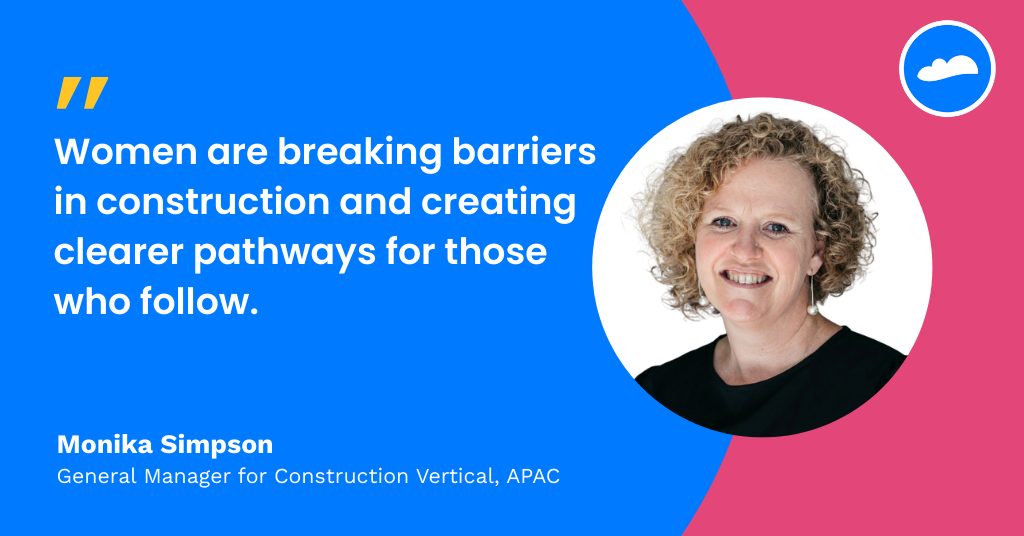
At The National Association of Women in Construction (NAWIC) QLD Award Winners Showcase in Brisbane, the conversations centered on how women have progressed in a predominantly male‑dominated construction industry. Many spoke about the barriers they met early on, how they built their capability over time, and how they now support other women entering the industry.
The event showed a clear pattern. Leadership grows when people have access to opportunity, structured development, and support from their teams. The industry leaders recognised by NAWIC demonstrate how this progress strengthens the broader industry.
Those recognised by this showcase were not only advancing individually. They were improving how knowledge is shared, how capability is developed, and how other women can progress in an industry that remains heavily male dominated. Their leadership is shaping teams, influencing culture, and strengthening pathways that support long‑term participation and advancement. This commitment to lifting others is one of the reasons Cloudstaff became a member of the National Association of Women in Construction (NAWIC)..
What I Saw at the Showcase
The awards recognised excellence across professional achievement, industry impact, diversity and inclusion leadership, and workplace transformation.
What stood out wasn’t the individual accomplishments, though those were significant. It was the pattern underneath.
The project managers, engineers, and business leaders being honoured had consistently built teams that delivered under pressure while maintaining quality. They created pathways for emerging talent that reduced time to productivity. They structured environments where people stayed longer and performed better.
These are the same challenges every construction leader I speak with is trying to solve right now.
- Skills shortages
- Capacity constraints
- Retention pressure (exacerbated by mental health strains and work life balance challenges in long-hour male dominated workplaces)
- Rising project complexity
The difference is these leaders solved them by expanding who gets access to opportunity, not by competing harder for the same shrinking talent pool.
Diversity as Capacity Infrastructure
This year my focus has been on really getting to the detail of some of the challenges I see facing industry leaders across Australia in workforce capacity models.
The conversation usually starts with immediate pressure, around project delays, senior staff overloaded, and hiring timelines extending.
The solutions that work long term share a common foundation. They distribute work differently. They create clearer pathways for capability development. They build teams where different perspectives strengthen decision making.
This is where workforce diversity stops being a compliance exercise and becomes capacity infrastructure.
Research from the University of Sydney’s Project Leadership Program found that leadership diversity directly influences performance outcomes in construction management. Studies consistently show that diverse construction teams deliver better project outcomes. Varied perspectives identify problems earlier and generate more robust solutions. Diverse teams also tackle issues like the gender pay gap compared to male counterparts and unconscious bias in career progression for underrepresented groups.
When I look at the companies maintaining delivery standards despite workforce constraints, I see teams that look different than they did five or ten years ago. More women in senior technical roles. Broader geographic representation. Age diversity that combines institutional knowledge with digital fluency. What might appear to be aesthetic changes are actually strategic capacity decisions that shape how effectively teams deliver construction projects.
The NAWIC Model
From what I observed at the showcase and learned about NAWIC‘s work, three areas stood out as directly impacting industry capacity:
Professional development through structured mentoring programs, technical training, and leadership pathways that help women advance faster in construction roles.
Industry advocacy that address systemic barriers, working to expand opportunities for female workers entering and progressing in the field.
Community and connection that creates support networks, which I’m seeing helps with retention across the construction sector.
Watching how this more holistic approach plays out in Brisbane’s construction market, the direct link to capacity building is clear.
Queensland’s construction boom is real. Brisbane’s infrastructure pipeline includes $7.1 billion in development for the 2032 Olympics. The region needs skilled professionals in leadership positions and at every level, and traditional hiring can’t meet that demand.
NAWIC’s work to broaden access, accelerate development, and improve retention directly addresses the capacity gap every company is navigating.
What a Diverse Workforce Means for the Australian Construction Industry
The construction workforce shortage isn’t easing. Infrastructure Australia’s 2025 Market Capacity Report confirms the skills shortage will persist well past 2027.
Companies responding effectively are making two shifts:
First, they’re redesigning how work flows through their organisations.
Standards-driven tasks get structured for scalability. Senior management focus on oversight and decision making. Quality comes from system design rather than individual heroics.
Second, they’re expanding where capability comes from.
That means investing in talent that traditional hiring filters might have overlooked. Creating development pathways that build competency faster. Structuring environments where people from different backgrounds contribute effectively.
This includes talent from marginalised groups, younger generations, and diverse backgrounds, closing gaps in areas like work hours flexibility and well-being support.
NAWIC provides infrastructure for the second shift. Their programs create pathways. Their advocacy removes structural barriers. Their community supports the retention that makes capability investment worthwhile.
For Cloudstaff, joining NAWIC connects directly to how we think about building sustainable delivery models across the APAC region. We work with companies navigating capacity pressure by helping them structure teams that scale without compromising quality or compliance.
The companies succeeding in this environment don’t just hire differently, rather, challenge the status quo and design teams that reflect the complexity of the problems they solve.
Diversity and Inclusion: The Competitive Reality
Across the region, construction firms are recognising that actively seeking diverse talent makes their teams stronger.
The projects delivered on time with maintained quality standards are increasingly led by diverse groups that combine experience with fresh perspective. Senior engineers who’ve navigated decades of project complexity work alongside professionals who bring different problem-solving approaches and stakeholder understanding.
Projects are more complex now. Coordination demands are higher. Stakeholder expectations have evolved. Regulatory environments continue tightening. Next-generation digital tools create new capabilities but also new integration challenges. Implementing strategies that embrace change, including building diversity, is therefore essential.
Teams that can navigate this complexity include people who think differently, notice different problems, share insights, and bring different solutions. This is why seeking out diverse talent from a variety of backgrounds, locations, and gender benefits the project as a whole.
Companies that figured this out early have a delivery advantage now. They’re not competing for the same 50 construction workers everyone else is chasing. They’ve opened up their recruitment funnel. They’ve created faster development pathways. They’ve structured environments where capability grows instead of losing talent to competitors.
Supporting an Inclusive Workforce in the Construction Industry
Cloudstaff joined NAWIC because we support and believe in the positive impact of what they’re doing.
We look forward to engaging with NAWIC and exploring how we can champion their efforts to build gender equity and expand capability in the male-dominated industry of construction.
For the companies we work with, this means access to broader networks, stronger development pathways, and connection to the community driving real change in how construction teams get built.
The workforce shortage reshaping our industry won’t resolve through traditional hiring alone. It requires building wider talent pipelines by tapping employees from diverse backgrounds, creating faster development pathways, and designing sustainable workforce models. NAWIC is building that infrastructure, and we’re supporting it because it directly aligns with how we help construction companies build capacity that lasts.
The recent NAWIC event reinforced something I’m observing in my conversations with industry leaders, which is that companies building the most resilient delivery models aren’t just hiring differently, but designing diverse teams that reflect the complexity of the problems they solve. This approach is delivering results.
Here’s to a more inclusive future in the Australian construction industry.
About the Author
Monika Simpson is the General Manager for Construction and Engineering at Cloudstaff, where she works with construction, engineering, and design companies across APAC to build workforce models that support growth without compromising quality or compliance. With deep experience in workforce strategy and operational delivery, Monika focuses on helping teams design sustainable capacity so local professionals can stay focused on high-value work.
Want to learn more about building sustainable construction delivery capacity? Explore Construction Back Office Operations Outsourcing.