
By Ivan Popic
Businesses these days are no longer confined to a single location, thanks to globalization. With teams spread across countries, managing a distributed team and a remote workforce adds complexity, as employees are often located in different regions with varying regulations and needs. From managing time zones to bridging cultural gaps, businesses must address these hurdles to keep collaboration smooth and productivity high.
By tackling these issues head-on, organizations can make the most of outsourcing while keeping their teams connected and effective.
Managing a Remote Team is a Core Skill for Leaders
Unlike traditional office settings, remote teams operate across physical distance and often span multiple time zones, making communication and collaboration more complex. Great remote managers understand that managing remote teams requires more than just overseeing tasks—they must foster open communication, set clear expectations, and create a sense of unity among team members who may never meet in person.
By implementing best practices such as regular check-ins, transparent processes, and leveraging technology, managers can overcome the unique challenges of remote work. The ability to adapt, communicate effectively, and build trust is essential for creating a successful and engaged remote team.
1. Leverage Technology for Communication
Technology is the backbone of managing remote teams, making it essential for teams to effectively collaborate virtually in a remote setting. Tools like Slack, Microsoft Teams, Zoom, and Asana facilitate virtual collaboration by enabling seamless communication and project management. These platforms allow team members to stay connected, share updates, and collaborate in real-time, regardless of their physical location.
Companies also use cloud-based systems like Google Workspace or Dropbox to ensure everyone has access to the same files and resources. Project management tools help automate routine tasks and streamline workflows for remote teams, reducing manual effort and improving productivity.
2. Establish Clear Goals and Expectations
When teams are spread across time zones, clarity is key. Establishing clear rules for remote workers is essential to set expectations and boundaries, ensuring everyone understands the guidelines they need to follow.
Set clear goals, deadlines, and expectations to ensure everyone is on the same page. Regular check-ins and progress updates help keep projects on track. This approach minimizes misunderstandings and ensures that all team members understand their roles and responsibilities.
3. Adapt to Time Zone Differences
Time zones can be a major hurdle, but companies find creative ways to work around them. Some adopt flexible working hours, allowing employees to work during their most productive times. Asynchronous communication enables team members to collaborate effectively across time zones without needing to be online at the same time. Others schedule overlapping hours where all team members are available for meetings or discussions.
4. Foster a Strong Company Culture
Building a sense of belonging is crucial for remote teams. Companies invest in virtual team-building activities, such as online games, coffee chats, or even virtual happy hours, to strengthen relationships. Regular all-hands meetings keep everyone informed and connected to the company’s mission and values. Company values play a key role in shaping remote culture and guiding team behavior, ensuring consistency and alignment across distributed teams.
5. Embrace Cultural Diversity
A global team brings diverse perspectives, but it also requires cultural sensitivity. Companies provide training to help employees understand and respect different cultural norms and communication styles.
Recognizing and adapting to individual communication preferences within a diverse team is essential for reducing misunderstandings and fostering effective collaboration. Encouraging open dialogue and inclusivity ensures that everyone feels valued and heard.
6. Career Progression
Career progression is a top priority for remote employees, who may worry about missing out on growth opportunities compared to their in-office peers. You should recognize this challenge and make it a point to support the career development of their remote team members. This can involve providing regular feedback, offering coaching sessions, and facilitating access to online training or mentorship programs.
By maintaining open communication and holding regular check-ins, you can better understand each team member’s career goals and help them navigate new challenges and projects. Investing in the career progression of remote employees not only boosts motivation and engagement but also strengthens the overall success of the remote team.
7. Prioritize Work-Life Balance
Working across time zones can blur the lines between work and personal life, especially as individual work preferences and the nature of a remote role can influence how employees manage their schedules and maintain balance.
Companies prioritize work-life balance by encouraging employees to set boundaries, take breaks, and disconnect after work hours. This approach not only boosts morale but also prevents burnout, which is a unique challenge when working remotely due to the difficulty of maintaining clear boundaries between work and home life.
8. Build Trust and Accountability
Trust is the foundation of any successful remote team, and relationship building through regular interactions is essential to strengthen connections and foster trust among team members.
Companies foster trust by focusing on outcomes rather than micromanaging processes. Open discussion and transparency between managers and their direct reports are crucial for building trust, clarifying expectations, and avoiding misunderstandings.
Encouraging accountability and ownership empowers employees to take initiative and deliver results. Regular team meetings play a key role in fostering accountability and building trust within the team.
9. Check Ins and In-Person Meetings
Regular check-ins and occasional in-person meetings are key to keeping remote teams connected and aligned. Virtual check-ins—via video calls, phone chats, or messaging—help team members share updates, tackle challenges, and stay on track.
While remote work offers flexibility, in-person interactions remain vital for building trust, strengthening relationships, and sparking creativity. Organizing periodic meetups or retreats can enhance team bonding and collaboration. By blending remote and in-person strategies, managers can foster a balanced environment that boosts both well-being and productivity.
10. Continuously Adapt and Improve
Managing a global team is an ongoing process. Companies regularly seek feedback from employees to identify pain points and implement improvements, ensuring that every employee feels supported throughout the process.
After gathering feedback and before implementing improvements, documenting workflows and procedures helps new hires get up to speed quickly, reducing onboarding time and empowering them to find answers independently.
Staying agile and open to change ensures that the team remains productive and engaged. These continuous improvement strategies are especially relevant for human resources professionals overseeing remote teams.
Managing a Team Across Countries is No Small Feat, but with the Right Strategies, It Can Be Rewarding
By leveraging technology, fostering communication, and embracing diversity, companies can build cohesive, high-performing teams that thrive in a global environment. The key lies in understanding the unique challenges of remote work, including the lack of physical proximity and the need to adapt to a remote setting, and creating a culture of collaboration, trust, and inclusivity.
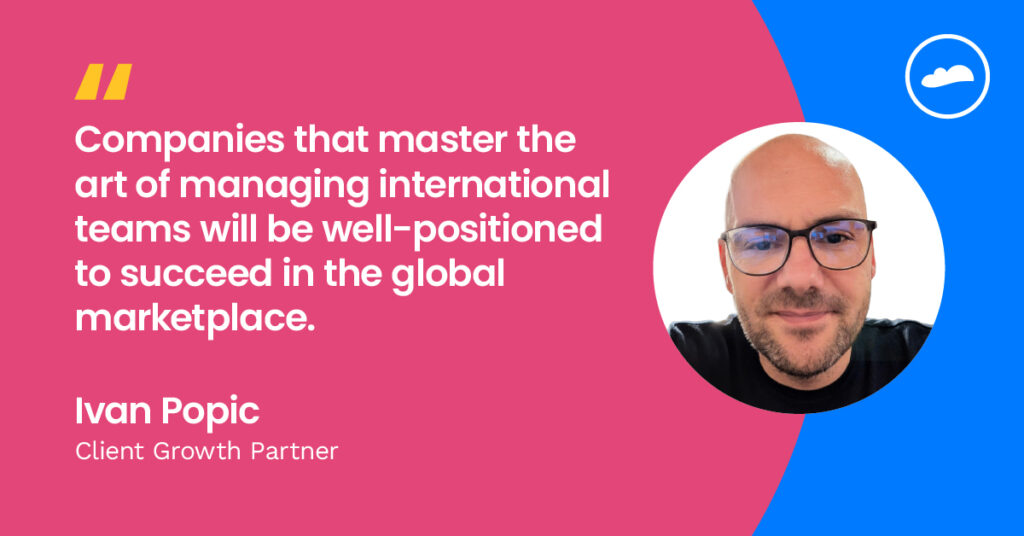
As the world continues to shrink, companies that master the art of managing international teams—and effectively lead distributed teams—will be well-positioned to succeed in the global marketplace.
About the Author
Ivan Popic is Cloudstaff’s Growth Partner based in Bogota, Colombia. He is a seasoned professional with over 15 years of experience in client relationship management, business development, and strategic growth. His relationship-driven approach and entrepreneurial mindset have consistently led to successful partnerships and sustained client satisfaction. With a diverse background in multicultural environments, Ivan’s adaptability and strategic thinking make him a trusted advisor in global business landscapes.