
By Lee Wade
If you’re reading this, chances are you’re looking for a way to scale your customer service operations without the hassle of hiring in-house.
Maybe you’re overwhelmed by the thought of managing a team remotely, or perhaps you’re just not sure where to start. The challenges of hiring in-house include not only recruitment and training, but also significant infrastructure expenses. Outsourcing can lead to cost reductions by minimizing these overheads.
Don’t worry, you’re not alone. Finding the right remote staffing service that offers dedicated teams for customer support can feel like searching for a needle in a haystack. But with the right approach, it’s totally doable.
Let’s break it down.
Why Dedicated Teams Matter
First, let’s talk about why dedicated teams are a game-changer. Unlike shared resources, a dedicated team is 100% focused on your business.
They’ll understand your products, your customers, and your brand voice inside and out. This consistency is critical for delivering exceptional customer service.
Plus, it’s a cost-effective way to scale without the headaches of recruiting, training, and managing a team yourself.
Benefits of Outsourcing Customer Service
Outsourcing customer service brings a host of advantages that can transform the way businesses support their customers. One of the most significant benefits is cost savings—by working with a third-party provider, like Cloudstaff, companies can reduce expenses related to hiring, training, and maintaining an in-house team.
Outsourcing customer service also gives businesses immediate access to specialized expertise and a global talent pool, making it easier to offer support in multiple languages and across different time zones.
This expanded reach means your customers can get help whenever they need it, boosting customer satisfaction and loyalty. With a dedicated team focused solely on customer support, businesses can ensure that every customer interaction is handled professionally and efficiently.
Plus, outsourcing allows companies to focus on their core operations and strategic goals, knowing that their customer service is in expert hands.
Ultimately, outsourcing customer service is a smart way to enhance service quality, improve customer experience, and drive business growth.
In-House vs Outsourced Customer Service Teams
Choosing between an in-house and outsourced customer service team is a crucial decision for any business. In-house teams offer greater control over the customer experience, allowing you to shape every interaction to reflect your brand’s values and culture. However, building and maintaining an in-house team can be expensive, with costs for office space, technology, training, and ongoing management quickly adding up.
On the other hand, outsourced customer service teams provide significant cost savings and flexibility. These teams can scale up or down as your business needs change, and they bring a wealth of experience from working with multiple clients and industries.
While some businesses may have concerns about service quality or data security when working with an outsourced customer, choosing a reputable provider with strong quality control measures can help address these issues.
Ultimately, the right choice depends on your specific requirements, business goals, and budget—balancing control, cost, and quality to deliver the best possible customer experience.
What to Look for in a Remote Staffing Service
1. Experience in Customer Service
This is the truth all business owners should know: Not all remote staffing services are created equal. Look for a provider that specializes in customer service. They should have a track record of building teams that excel in handling inquiries, resolving issues, and maintaining high customer satisfaction, as well as providing technical support and comprehensive customer care. Ask for case studies or client testimonials to back this up.
2. A Rigorous Hiring Process
The quality of your customer service team will directly impact your brand reputation. Make sure the staffing service has a thorough vetting process. This includes language proficiency, technical skills, and soft skills like empathy and problem-solving.
3. Scalability
Your business isn’t static, and neither should your team be. Choose a service that can scale up or down based on your needs. Some providers offer offshore teams to help businesses scale efficiently across different regions. Whether it’s seasonal spikes or long-term growth, flexibility is key.
4. Training and Onboarding Support
A great remote staffing service won’t just hand you a team and walk away. They’ll help onboard and train the team to align with your brand’s processes and values. Ask about their training programs and how they ensure consistency. Training should also emphasize human empathy, enabling teams to deliver personalized and compassionate customer experiences.
5. Technology and Infrastructure
Remote teams need the right tools to succeed. Ensure the staffing service provides access to reliable communication platforms, CRM systems, and other tools your team will need to deliver top-notch support. Leading providers leverage artificial intelligence, new technologies, and self service solutions to enhance efficiency and customer experience.
Where to Place Your Outsourced Team
It is important to think strategically about where you locate your offshore team. When it comes to customer service, different countries have different strengths depending on your location and the location of your clients:
Colombia: Customer service staff are bilingual (English and Spanish). Colombia is uniquely positioned in the USA’s central time zone. So your team members are able to perform their customer service tasks during US business hours.
Philippines: Customer service team members will speak English only, but with a smooth American accent. Conversational American English as well as American and Australian cultural idioms are well understood. Located in Central Asia, Filipino customer service staff can serve the Australian outsourcing market when working day shift or service the USA outsourcing market when working night shift.
Kenya: Kenya’s education system was developed under English rule. So your customer service team members will speak in a well-rounded “UK English” style. East Coast Africa is an excellent service center for the customer service needs of all European clients.
How to Get Started
1. Define Your Needs
Before you start your search, be clear about what you need. How many agents do you require? What hours do you need coverage? What specific skills or languages are essential? Also, consider the volume and complexity of customer requests your team will need to handle. Having a clear picture will help you narrow down your options.
2. Research and Shortlist Providers
Look for providers with a strong reputation in the industry. When evaluating outsourced customer service providers, consider their expertise, service quality, and ability to meet your business requirements. Read reviews, ask for recommendations, and explore their websites to see if they align with your needs.
3. Ask the Right Questions
When you reach out to potential providers, don’t shy away from asking detailed questions. For example:
- How do you ensure quality control?
- Can you provide references from similar clients?
- What’s your process for handling performance issues?
- How do you address security concerns and protect customer data?
4. Test the Waters
Many providers offer trial periods or pilot projects. Working with a third party service provider on a trial basis allows you to evaluate their ability to handle customer service operations and maintain quality standards. This is a great way to see if their team is the right fit for your business before committing long-term.
Red Flags to Watch Out For
While there are many great providers out there, there are also some who might not meet your standards. Be cautious if:
- They’re vague about their hiring process or training methods.
- They don’t have clear communication channels or support systems.
- Their pricing seems too good to be true (it probably is). While cost reductions are a key benefit of outsourcing, extremely low prices may signal poor service quality or hidden costs.
Final Thoughts
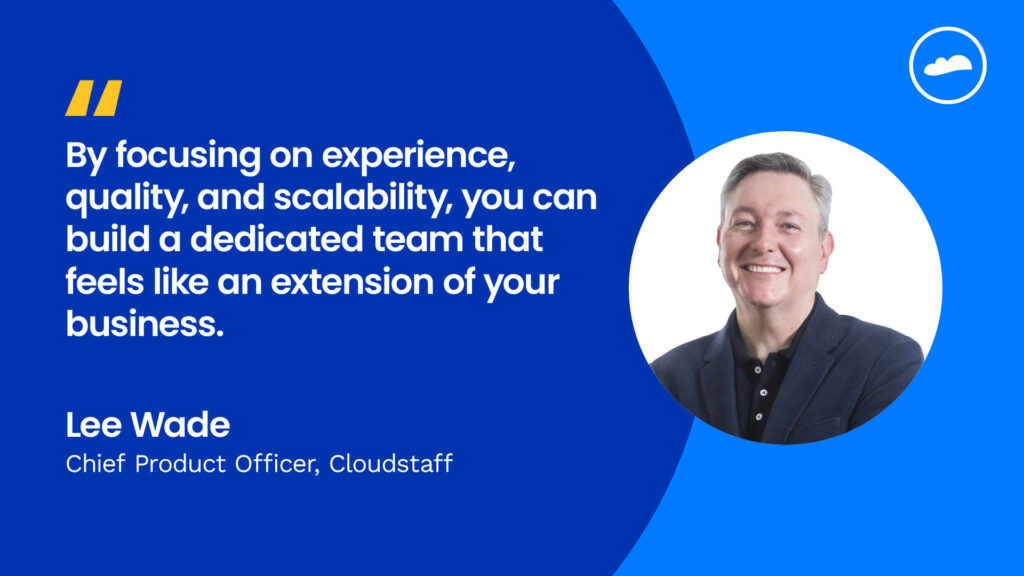
Finding the right remote staffing service for your customer service needs doesn’t have to be overwhelming. By focusing on experience, quality, and scalability, you can build a dedicated team that feels like an extension of your business.
Remember: the goal isn’t just to outsource. It’s to partner with a service that helps you grow and succeed.
So, take your time, do your homework, and trust your gut. The right team is out there, and they’re ready to help you deliver the kind of customer service that keeps your clients coming back.
About the Author
Lee Wade is Cloudstaff’s Chief Product Officer. As a seasoned leader in product strategy and development, he is dedicated to crafting top-tier solutions for our clients. His expertise ensures that Cloudstaff remains at the forefront of industry advancements, delivering cutting-edge services that meet and exceed client expectations.
Up for the best dedicated outsourced customer service specialists in your team? Visit us and learn more about our top-notch remote staff.