
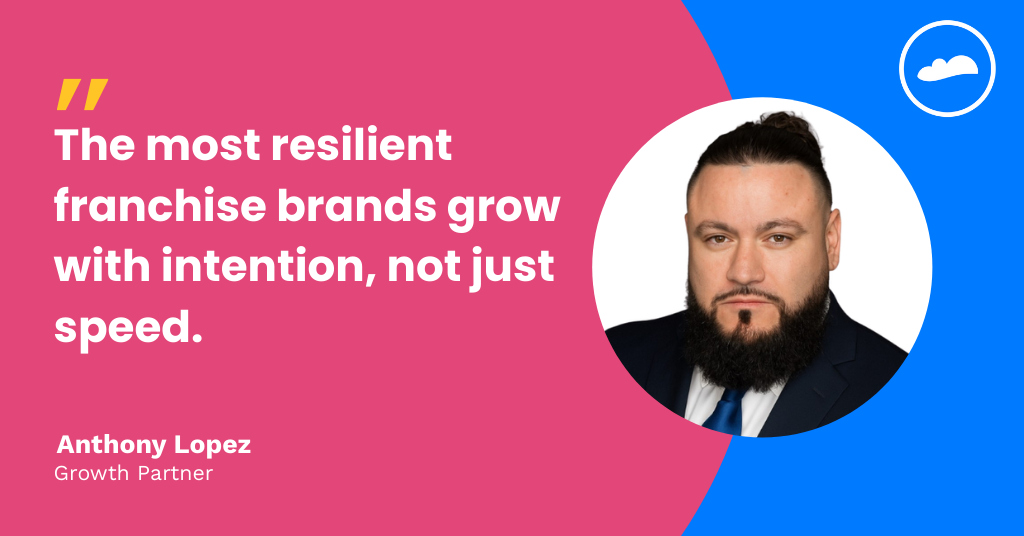
By Anthony Lopez
If you’re scaling a franchise right now, you’ve probably felt this tension.
On one hand, momentum is building. New units are opening, demand is up, and your brand is gaining traction. On the other, your head office team is stretched thin, field support is reactive, and franchisees are quietly drowning in operational drag.
You’re not failing. You’ve just hit a crossroads that every growing franchise faces, which is the moment that separates franchise businesses that plateau from those that achieve sustainable growth.
The real question isn’t can you grow. It’s how do you scale franchise operations without exhausting the people who make everything work?
The Real Problem: Operational Drag, Not Lack of Demand
Growth stalls because of operational friction, not because of weak concepts.
The 2024 IFA Franchisor Survey found that 80% of franchise systems report staffing shortages as a major obstacle to growth. Another 74% are limiting support to franchisees due to fear of joint-employer liability. And 81% have raised wages just to retain local talent, squeezing margins at the unit level. Managing cash flow becomes critical in this environment to ensure sustainable franchise growth.
For franchise owners, this translates to spending most of their week on tasks that don’t drive revenue: scheduling, file coordination, CRM updates, invoice tracking, and juggling the various responsibilities that come with franchise ownership.
For franchisors, it’s a constant balancing act. Wanting to help, but wary of overstepping, and facing unique challenges in supporting franchisees while managing risk.
What looks like a people problem is often a capacity design issue in disguise. Careful planning to achieve operational consistency is critical for business success and long-term scalability.
The best franchise systems don’t just add more people. They add smarter layers of support that free humans to do human work.
Building a Strong Foundation for Franchise Businesses
Every thriving franchise starts with a solid base, one that drives expansion while supporting real, sustainable success for everyone involved. Here’s what matters most for franchise development:
Develop a smart franchise strategy. This guides you from finding the right partners to watching them thrive locally. Go beyond unit counts and territories. Set clear expectations, proven processes, and provide instant access to tools, training, and resources that support strategy development.
Prioritize quality partnerships. Skip quick wins. Build strong relationships, grasp each location’s uniqueness, and co-create solutions with franchise owners for lasting success.
Deliver comprehensive support. Create setups where partners nail great customer service, keep brand consistency, and boost local businesses and communities. This sparks impact beyond your reach while providing essential head office support.
Foster shared confidence. Invest in the right development and backing. Your brand and partners grow together: excited, secure, and resilient for the long haul.
For Franchisees: Reduce Repetitive Work, Not Local Teams
Franchise owners I work with are looking for ways to protect their people’s focus so they can spend less time on admin and more time delivering great service.
For new franchisees, the transition to franchise ownership can be overwhelming, often leading to emotional exhaustion as they juggle multiple responsibilities and adapt to new systems.
Imagine your local team spending less time on data entry and more time on client relationships, quality control, and creative problem-solving. That’s possible when routine, repeatable tasks are handled by a dedicated virtual team member: someone who works full-time for you, integrates into your workflow, and reports directly to you.
These are dedicated professionals who work exclusively for you, not freelancers or shared resources. They are just consistent, reliable support that scales with your volume and helps new owners manage their operations effectively.
Comprehensive support and regular check-ins are key to help prevent burnout among franchise owners, especially during the early stages of franchise ownership.
And because these team members are legally employed through a compliant partner (not misclassified as independent contractors), you avoid IRS exposure. The IRS is pretty clear about what happens when you get classification wrong: back taxes, penalties, and audits.
This approach is less about cutting costs and more about building sustainable capacity. It’s an essential strategy for supporting new owners and preventing emotional exhaustion as they scale franchise operations.
For Franchisors: Scale Support Without Scaling Overhead
Here’s where many brands get stuck. They want to support franchisees but fear adding complexity to head office or triggering joint-employer risk.
The American Franchise Act (H.R. 5267) clarifies that offering tools, training, or guidance does not make you a joint employer as long as you’re not mandating or directly managing franchisee employees. Open communication and advisory councils can further help clarify support boundaries, ensuring both franchisors and franchisees understand their roles and responsibilities in the franchising process.
That opens the door to offer preferred support resources like vetted virtual staffing partners as part of your ecosystem. Think of it like your POS provider or marketing co-op: optional, scalable, and low-risk.
Supporting franchisees also means providing access to mentorship programs and regular check-ins, which foster ongoing guidance, knowledge sharing, and relationship-building among franchise owners and business owners.
The result?
- Franchisees get relief without waiting months to hire
- Head office avoids becoming a staffing agency
- Brand consistency improves because owners aren’t cutting corners to keep up
- Franchisees gain access to resources and support systems that help them optimize operations and drive growth
What Do Sustainable Franchise Systems Do Differently?
They answer this question early: “How do successful franchise networks scale operations sustainably?”
Franchise development and strategy development are critical for sustainable success in the long run. Establishing a strong, scalable foundation from the outset ensures that franchise systems can grow responsibly and achieve ongoing franchise success.
Their playbook includes:
Delegating the predictable. Offload transactional work so local teams focus on high-touch service and great customer service delivery.
Empowering, not mandating. Offer support tools as options, not requirements, respecting franchisee autonomy.
Designing for simplicity. Use technology and dedicated teams to reduce cognitive load across the system.
Leveraging expertise and building a strong network. Foster connections among franchise brands, entrepreneurs, and industry professionals to share knowledge, solve problems, and drive growth.
Engaging with local businesses and communities is a critical part of the franchising process. Sustainable franchise systems tailor products and marketing strategies to meet the needs of local markets, empowering entrepreneurs to connect with and support their communities while building strong relationships. This community engagement fosters brand loyalty, authenticity, and long-term franchisees success.
Monitoring financial performance and carefully selecting the right location for expansion are also critical to ensure sustainable growth and long-term success.
Burnout doesn’t have to be inevitable. In fact, it’s often a signal that your support model hasn’t caught up to your growth. Franchise success depends on a well-structured franchising process.
The Bottom Line
Scaling a franchise shouldn’t mean choosing between speed and sanity.
The most resilient brands in 2025 are growing smarter, focusing on sustainable franchise growth that protects both franchisee autonomy and head office bandwidth. They’re using dedicated virtual teams as a strategic layer of comprehensive support.
They’re setting realistic expectations for prospective franchisees regarding investment and operational requirements. They understand their industry dynamics and the unique challenges that come with franchise ownership.
If you’re leading a franchise system or running a unit within one, ask yourself: Where could a little extra capacity create a lot more confidence? Where could better support help prevent burnout and drive long-term success?
About the Author
Anthony Lopez is a Growth Partner at Cloudstaff, helping U.S. companies design customized offshore talent solutions that scale efficiently while maintaining productivity and compliance. With over 10 years of experience leading enterprise sales operations and building high-performing teams, Anthony combines strategic insight with a hands-on approach to workforce solutions. He partners with forward-thinking businesses across technology, accounting, and e-commerce to reduce overhead, increase efficiency, and drive long-term success.
Ready to explore how dedicated virtual teams can support your business and help scale franchise operations without adding complexity? Let’s talk.