
By Lloyd Ernst
On December 30, the Philippines pauses. Not for celebration — but for reflection. It’s Rizal Day: a day to remember Dr. José Rizal, the national hero who chose truth over silence, dignity over convenience, and moral courage over compliance.
He didn’t lead with power. He led with principle.
And today, in offices across the country — in Clark, Cebu, Davao, Manila — I see that same spirit alive, not in speeches nor in slogans, but in quiet acts of integrity:
- The engineer who stays late to fix a flaw no one else noticed.
- The support specialist who flags a data risk before it becomes a breach.
- The team lead who protects her people’s well-being — even when the deadline looms.
These aren’t exceptions; they’re the norm.
So what makes a remote outsourcing partner truly trustworthy?
- Not their pricing.
- Not their SLAs.
- Not their certifications.
It’s the willingness to do what’s right — even when no one is watching.
That’s the legacy Rizal left behind. And it’s the culture we’ve seen grow organically within our teams over two decades.
At Cloudstaff, we work alongside more than 6,000 professionals in the Philippines — many of whom carry this sense of duty not as a job requirement, but as a personal standard. They don’t treat your business as a contract. They treat it as a responsibility. And that changes everything.
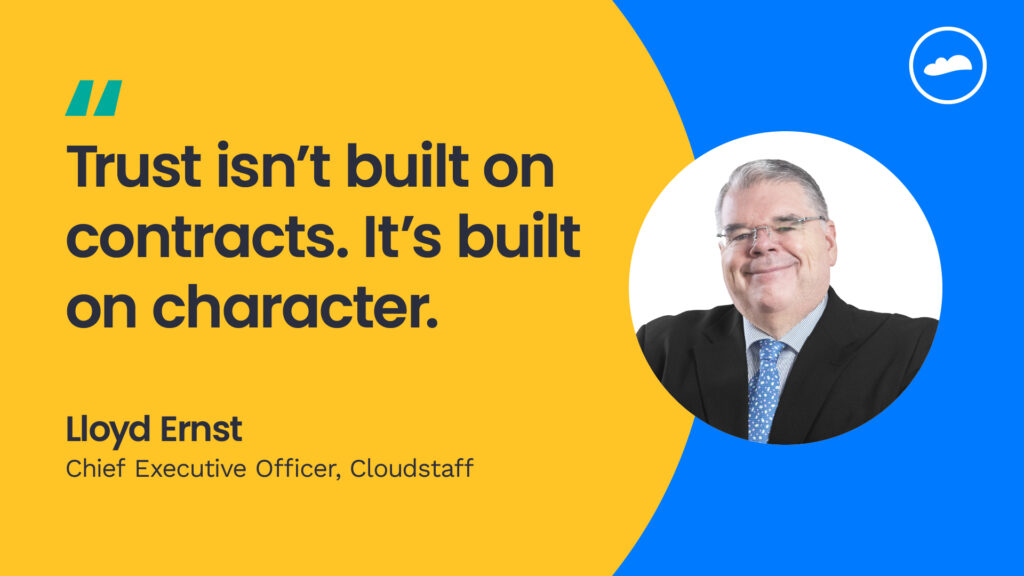
In an industry often reduced to cost-per-seat and headcount, we forget that trust isn’t built on efficiency. It’s built on character.
Rizal wrote:
“The youth is the hope of our future.”
Today, I’d say:
“The quiet ones — the ones who serve without seeking credit, who speak up when something feels wrong, who protect what matters — are the hope of our business future.”
Because real trust doesn’t come from promises. It comes from consistency, from integrity, and from people who choose to act — not because they’re measured, but because they believe.
This isn’t about systems. It’s about soul. And soul shows up in small ways:
- The QA analyst who rewrites a script at midnight because “it’s not fixed until it’s flawless.”
- The HR partner who advocates for mental health days during peak workload.
- The client success manager who admits a gap — before the client sees it.
These moments don’t make headlines, but they build legacies.
We didn’t set out to create this culture. We nurtured one that already existed — rooted in Philippine values of “hiya” (dignity), “utang na loob” (reciprocal care), and “malasakit” (genuine concern).
Rizal didn’t ask for a holiday. He asked for people to live with conscience.
Our teams would choose to be trusted more than recognized, not because they don’t want to be seen, but because they know trust is what endures. Recognition is a moment. Trust is a legacy.
And when you look beyond the pitch decks and proposals, then ask, “Who’s on the other side of this screen?” The answer matters more than any KPI, because the best partnerships aren’t built on transactions but shared values.
If you’re looking for a team that acts like an extension of your own – not just executing tasks, but protecting your reputation, not just meeting deadlines, but holding standards – you’re not looking for a vendor. You’re looking for stewards.
And every Rizal Day, I’m reminded: The most powerful leadership speaks softly.
About the Author
Lloyd Ernst, Cloudstaff’s Founder and CEO, is a visionary serial entrepreneur with a proven track record in professional services and high-tech industries. He has been at the forefront of Cloudstaff, driving the global remote staffing revolution with unwavering vision and dedication. Through his efforts, Lloyd is not only reshaping the future of work but also empowering businesses and professionals to thrive in an increasingly connected and dynamic world. His leadership continues to inspire and redefine the possibilities of remote staffing on a global scale.
If you’re ready to work with a team whose trust is built on character — not contracts — let’s talk.