
By Midel Santos
Outsourcing has become a cornerstone of modern business operations, offering companies the flexibility to scale, reduce costs, and access specialized skills. However, with this opportunity comes a significant responsibility: ensuring that your outsourced staff are treated well.
After all, these individuals are an extension of your team, and their well-being directly impacts their performance, morale, and your company’s reputation. Ethical outsourcing practices not only support staff welfare but also enhance your company’s reputation and credibility.
Overcoming Ethical Challenges
Navigating the ethical challenges of outsourcing requires a strategic approach grounded in transparency, accountability, and social responsibility. Businesses should begin by thoroughly researching potential outsourcing partners to ensure they uphold ethical standards and comply with relevant labor laws. Establishing clear contractual agreements is essential—these should outline expectations for fair labor practices, environmental sustainability, and data security.
This approach not only protects your company’s reputation but also supports fair labor practices and sustainable business growth.
So, how do you ensure that your outsourced staff are treated fairly and ethically? The answer lies in partnering with the right outsourcing provider. It is crucial to choose an outsourcing partner who understands the ethical implications of outsourcing decisions.
Here are key practices your outsourcing provider should have in place to guarantee the well-being of your outsourced staff:
1. Transparent and Ethical Hiring Practices
A reputable outsourcing provider should adhere to fair hiring practices, ensuring that staff are recruited ethically and without discrimination. This includes providing clear job descriptions, offering competitive wages, and ensuring candidates are fully informed about their roles and responsibilities. Emphasizing fair practices in recruitment and ongoing employment helps promote transparency, fair wages, and a positive work environment.
A strong company culture that values honesty, fairness, and responsibility further support ethical hiring and retention, fostering a workplace where employees and contractors alike can thrive.
What to ask your provider:
- What is your approach to responsible hiring?
- What benefits do your remote professionals actually receive?
2. Compliance with Labor Laws and Regulations
Your outsourcing provider must operate in full compliance with local and international labor laws. This includes adhering to working hour limits, ensuring all staff are paid equitably, providing mandated benefits (such as healthcare and paid leave), and ensuring safe working conditions. Monitoring labor conditions and upholding worker rights are also essential parts of legal compliance.
What to ask your provider:
- Which labor laws govern your staff, and how do you stay current as regulations change?
- Can you provide documentation of compliance?
3. Safe and Healthy Work Environments
Whether your outsourced staff work remotely or in an office, their physical and mental well-being should be a priority. Fair treatment for all staff is essential, including fair compensation, safe working conditions, and respect for workers’ rights.
The provider should ensure that workspaces are safe, ergonomic, and conducive to productivity. For remote workers, this includes providing the necessary tools and support to maintain a healthy work-life balance.
What to ask your provider:
- What does ‘safe’ mean for remote workers—and how do you actually ensure it?
- Do your staff have access to counseling or health services?
4. Fair Compensation and Benefits
Outsourced staff should receive fair compensation that reflects their skills and the local cost of living. Additionally, they should have access to benefits such as health insurance, retirement plans, and paid time off. Offering paid training as part of a comprehensive benefits package ensures employees are well-prepared and supported in their roles.
Some ethical outsourcing providers may also offer company ownership opportunities to their employees, further aligning company values with staff interests. The benefit of these practices is that they enhance employee morale, improve retention, and contribute to a positive company reputation.
What to ask your provider:
- What factors determine compensation for your team members?
- Beyond salary, what benefits do you provide your team?
5. Regular Training and Development Opportunities
Investing in the growth of your outsourced staff not only improves their skills but also boosts their morale and loyalty. Your outsourcing provider should offer regular training programs, mentorship opportunities, and career development resources. In contrast, some providers cut costs by offering minimal to no training, which can negatively impact employee performance and satisfaction.
Prioritizing comprehensive staff development leads to long-term benefits, such as stronger ethical standards, more responsible relationships, and a better reputation for your business.
What to ask your provider:
- Do you invest in upskilling your staff, or expect clients to train them?
- Do your workers have clear paths for promotion and growth?
6. Open Communication Channels
Outsourced staff should feel heard and valued. The provider should establish open communication channels where employees can voice concerns, provide feedback, and seek support without fear of retaliation.
What to ask your provider:
- How do you handle employee feedback and grievances?
- What mechanisms are in place for staff to report issues?
7. Regular Performance Reviews and Feedback
Constructive feedback and recognition are essential for employee satisfaction. The provider should conduct regular performance reviews, celebrate achievements, and address areas for improvement in a supportive manner.
What to ask your provider:
- How often do you conduct performance reviews?
- Do you have a system for recognizing employee achievements?
8. Commitment to Diversity and Inclusion
A good outsourcing provider fosters a culture of diversity and inclusion, ensuring that all staff feel respected and valued regardless of their background, gender, or ethnicity.
What to ask your provider:
- What does inclusion actually look like in your day-to-day operations?
- What happens when someone reports discrimination or harassment?
9. Regular Audits and Accountability
To ensure that these practices are consistently upheld, the provider should conduct regular audits of their operations to ensure fair labor practices are maintained. Regular audits should also verify that security standards are upheld to protect sensitive information. This accountability ensures that any issues are promptly addressed, and that ethical and sustainable practice is an ongoing priority.
What to ask your provider:
- How do you verify you’re actually following your own policies?
- Who’s held accountable when compliance failures occur?
10. Your Role as the Client
While the outsourcing provider bears the primary responsibility for treating your staff well, you also play a crucial role. It is important to choose to outsource ethically, ensuring that your outsourcing decisions align with fair labor standards and global ethical work practices, even when cost-effective options are available.
Maintain open communication with the provider, request regular updates on staff well-being, and visit the outsourced team (if possible) to show your commitment to their welfare. Avoid prioritizing short-term gains at the expense of ethical considerations and long-term sustainability.
Ensuring that Your Outsourced Staff are Treated Well is a Must
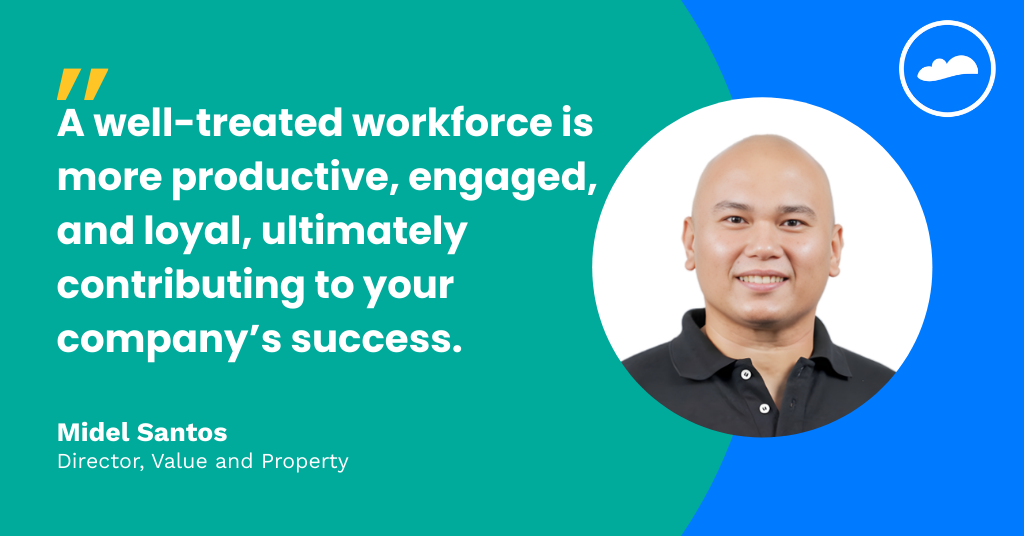
A well-treated workforce is more productive, engaged, and loyal, ultimately contributing to your company’s success. By partnering with an outsourcing provider that prioritizes ethical practices, transparency, and employee well-being, you can build a strong, sustainable partnership that benefits everyone involved.
When choosing an outsourcing provider, ask the right questions, demand accountability, and make staff welfare a non-negotiable part of your agreement. After all, your outsourced staff are not just a resource—they are an integral part of your team.
About the Author
Midel Santos is an accomplished operations leader with over 20 years of experience in the Business Process Outsourcing industry. Currently serving as Director of Value and Property at Cloudstaff, he oversees project management, campus development, and office leasing operations. Throughout his career, Midel has demonstrated expertise in strategic planning, process optimization, and organizational transformation, with a proven track record of driving operational excellence, improving customer retention, and implementing technology solutions across diverse business functions. Recognized as a change leader and role model for his leadership presence and analytical capabilities, he combines a strong sense of urgency with people-oriented management to consistently exceed performance expectations and build high-performing teams.
Cloudstaff has been recognized as an HR Asia Best Company to Work For for five consecutive years—because we treat our people, partners, and communities with fairness and respect.
See the policies and practices that make ethical virtual staffing possible:
Read our 2024 ESG Report →