
Great customer service is a cornerstone of any successful business. While managing it in-house might seem like the obvious choice, it often takes up too much time, resources, and effort, especially as your business grows.
Facing this challenge head-on, many businesses have embraced outsourcing as their ultimate solution. It’s a practical, strategic approach that allows you to elevate customer interactions while staying focused on what truly drives your business forward. Outsourcing customer service also provides global coverage, enabling support for customers in multiple languages and time zones.
In this article, we’ll explore how to offshore customer service effectively, helping you boost satisfaction and simplify your operations.
Why Outsource Customer Service?
Outsourcing customer service has become a powerful strategy for businesses aiming to enhance efficiency and customer satisfaction. Here’s why it’s worth considering:
1. Cost Efficiency
Outsourcing customer service can give you significant cost reduction. That means less costs for recruitment, training, salaries, or infrastructure. Additionally, outsourcing eliminates the need for extra office space, further reducing overhead costs.
2. Access to Expertise
Many outsourcing partners specialize in customer service. They bring industry best practices, advanced technology, and experienced agents to the table, ensuring your customers receive top-notch support through professional customer service.
3. Scalability
As your business expands, so do your customer service demands, often unpredictably. Outsourcing gives you the agility to scale your support team effortlessly, ensuring you’re always ready to meet rising demands without the hassle of hiring, training, or managing additional in-house staff.
4. 24/7 Availability
Many outsourcing providers offer round-the-clock support, ensuring your customer support operations will empower your clients to reach you at any time, regardless of time zones or holidays.
5. Focus on Core Priorities
By outsourcing customer service, your in-house team can focus on core business operations and strategic initiatives, rather than being bogged down by support tasks.
Actionable Steps on How to Outsource Customer Service Effectively
1. Define Your Goals and Requirements
Before outsourcing, take the time to clearly define your objectives. Are you focused on reducing operational costs, improving response times, or expanding to offer multilingual support? Outline your specific requirements in detail, including the support channels you need (such as phone, email, chat, or social media) and the level of expertise your team must have. It is crucial to ensure that customer inquiries are handled efficiently across all chosen support channels. This step ensures you align with a partner who can effectively meet your needs and deliver the results you’re aiming for.
2. Choose the Right Outsourcing Partner
Choosing the right outsourcing provider is a decision that requires careful consideration. Here’s what to focus on:
- Proven expertise in your industry. Select a customer support outsourcing company with a strong track record in your sector. This ensures they understand your unique challenges and can adapt their solutions to meet your needs effectively.
- Positive client feedback and case studies. These demonstrate their ability to deliver tangible results and build lasting partnerships. Working with industry leaders adds credibility and trust, as they are recognized for their reputation among top-tier clients.
- Advanced technology and tools. Choose a provider whose systems not only integrate seamlessly with yours but also have the potential to elevate your operations, ensuring a smooth, efficient, and forward-thinking approach to customer service experience.
- A strong commitment to quality and customer satisfaction. This reflects their dedication to delivering the same level of excellence you strive for. It is also important to regularly monitor the performance of the third party service provider to ensure accountability and maintain high standards.
By evaluating these factors thoughtfully, you can identify a partner who not only meets your expectations but also enhances your customer service strategy in meaningful ways.
3. Ensure Cultural and Brand Alignment
Your external team becomes the face of your brand, so it’s critical they embody your values, tone, and customer service philosophy. Invest in comprehensive training materials and clear guidelines to ensure every interaction reflects your brand’s identity. This alignment fosters trust, strengthens customer relationships, and maintains a cohesive experience across all touchpoints.
4. Leverage Technology for Integration
Partner with a provider that utilizes advanced data security and cutting-edge tools to integrate seamlessly with your existing infrastructure. This ensures uninterrupted communication, real-time access to customer data, and the ability to deliver personalized, efficient interactions that enhance the overall customer experience.
5. Monitor Performance and Provide Feedback
Define key performance indicators (KPIs) like response time, resolution rate, and customer satisfaction scores to measure success. Regularly review these metrics and share constructive feedback with your outsourcing partner. This collaborative approach fosters continuous improvement, ensuring your customer service remains effective, efficient, and aligned with your goals.
In summary
Customer service outsourcing is a powerful strategy for businesses seeking to enhance their customer experience, cost savings, and achieve sustainable growth.
By leveraging the specialized expertise of outsourcing companies and choosing the right outsourcing partner, businesses can deliver seamless service delivery, tap into advanced technology, and maintain a strong focus on core business functions. Understanding both the benefits and challenges of outsourcing enables companies to make informed decisions that drive customer loyalty and operational excellence.
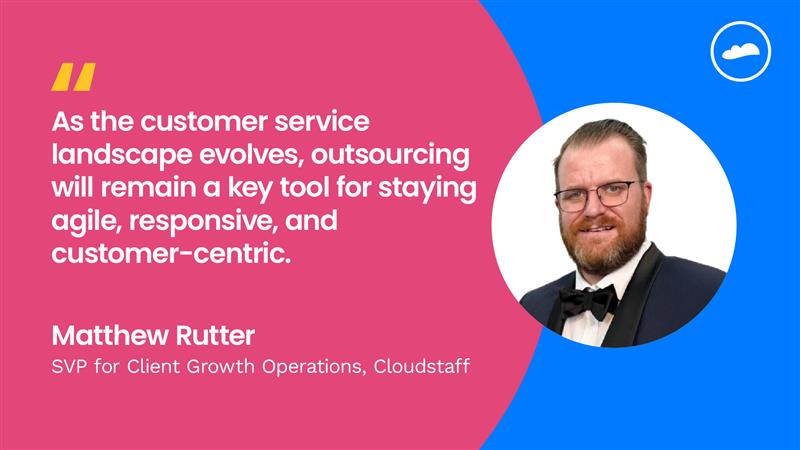
As the landscape of customer service continues to evolve, outsourcing will remain a vital tool for companies aiming to stay agile, responsive, and customer-centric. By embracing customer service outsourcing, your business can position itself for long-term success in a competitive market.
About the Author
Matthew Rutter serves as the Senior Vice President of Client Growth Operations at Cloudstaff, bringing over two decades of leadership experience in the BPO and telecommunications sectors. A proven entrepreneur, he has successfully founded and scaled companies within these industries, equipping him with deep operational acumen and strategic foresight. His expertise drives impactful growth and innovation, positioning Cloudstaff as a leader in delivering exceptional client solutions.
Looking to provide only the best customer service?
Find out why Cloudstaff could be the right partner for you →