
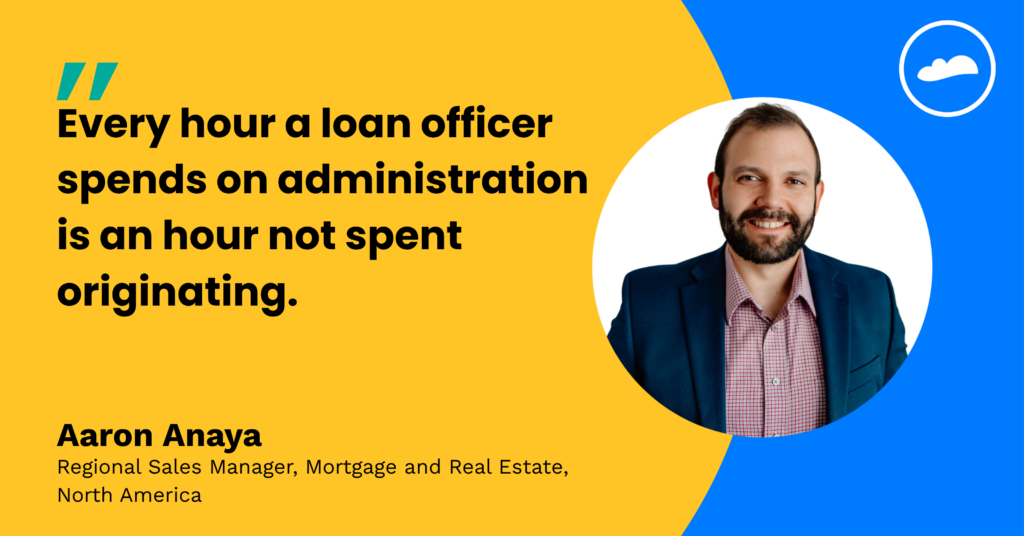
By Aaron Anaya
For four years, the mortgage industry has had a consistent answer to why profitability keeps slipping: interest rates.
Rates are why margins compressed. Rates are why consolidation happened. Rates are why solid operators found themselves running hard just to stay even.
I understand the argument. I lived through it. Over nearly a decade in this industry, building business development at E Mortgage Capital and watching NEXA Mortgage scale its operational model from the inside, I’ve had that conversation with hundreds of lenders, broker owners, and operations leaders across the country. Rates absolutely play a role in the cycle. What they don’t explain is why so many mortgage companies were fragile before rates ever moved.
That fragility was already built in.
A Profitability Problem That Predates the Rate Shift
The mortgage industry’s challenges with profitability are not solely a function of fluctuating interest rates. Instead, they stem from deeper structural issues within mortgage operational efficiency and the staffing models that support them. Mortgage lenders have long faced a complex landscape where rising operational costs, manual processes, and fragmented workflows contribute to inefficiencies that erode margins. These inefficiencies often manifest in extended cycle times, increased risk, and diminished customer satisfaction.
One of the key ways mortgage companies can address this profitability problem is by reevaluating their loan origination and underwriting processes. The traditional origination process often involves numerous manual steps, from document collection to compliance management, which not only slows down the cycle time but also introduces unnecessary expenses and risk. By streamlining processes and adopting automation and artificial intelligence (AI) solutions, lenders can reduce costs, improve decision making, and enhance the borrower experience.
Moreover, the mortgage business faces constant pressure to meet evolving customer demands and maintain compliance with industry standards. This requires a comprehensive approach that integrates technology with the right skills and expertise. Hiring and retaining qualified candidates and mortgage professionals who understand both the operational and regulatory aspects of the business is crucial. Mortgage staffing agencies can provide access to a scalable workforce with industry knowledge, helping lenders maintain agility and competitive edge in a challenging market.
In addition to technology adoption, improving communication across teams and providing clear performance metrics can help business leaders better manage resources and align their teams with business goals. A focus on reducing manual processes and unnecessary expenses while enhancing customer loyalty through faster, more accurate service is essential for long-term success.
As the mortgage industry continues to evolve, embracing a modern, integrated model that leverages AI adoption and machine learning, combined with a thoughtfully structured staffing approach, will be key ways to unlock sustainable profitability and operational excellence. This future-ready model not only addresses the industry’s current challenges but also positions mortgage lenders to expect and meet the demands of tomorrow’s customers.
According to the Mortgage Bankers Association’s 2025 Annual Mortgage Bankers Performance Report, independent mortgage banks lost an average of $1,056 per loan in 2023. The industry’s 2024 recovery brought that figure to $443 profit per loan, with total production expenses still running above $11,000 per loan. [Scotsman Guide coverage of MBA data] Production revenues reached $11,520 per loan in 2024, while expenses decreased to $11,076 per loan, according to MBA industry analysis. [National Mortgage News]
Those numbers point to something embedded in the cost structure itself.
During the refinance boom, high volume did something deceptive: it covered inefficiencies. Revenue masked overhead. Administrative layers grew alongside headcount, and adding people felt like scaling when it was actually building a cost structure that required exceptional volume just to sustain itself. Processors, closers, funders, underwriting assistants, loan officer assistants, account managers, and coordinators each made sense individually. Collectively, they produced an organization extraordinarily expensive to operate in any market that wasn’t running at peak.
When rates rose and origination volumes fell, what was left behind was an organization shaped for conditions that had already passed.
Where the Real Cost Lives
The profitability problem runs deeper than payroll. Where the highest-compensated talent is actually directing its time matters just as much as what that talent costs.
Loan officers, who generate all of the revenue, regularly spend meaningful portions of their day on document collection, pipeline status updates, CRM management, and file conditioning. None of those activities result in an origination. Every hour redirected there is an hour not spent in front of a referral partner or a borrower. Leadership faces the same pattern: when operations leaders spend their days managing workflow logistics, they’re pulling time away from recruiting, partnership development, and the strategic decisions that actually build the business.
The organization works hard, and the margins rarely reflect it. This is an architecture problem, and recognizing it as such matters because it requires a completely different solution than the one most companies have been reaching for.
The average cost for lenders to originate a mortgage is estimated to be over $12,000, and improving efficiencies by just 5% could save $600 per loan, translating to $600,000 in savings for lenders originating 1,000 loans per year. To improve operational efficiency, lenders should evaluate their current processes by identifying steps that take the most time or contribute to stalled loans, as even small improvements can lead to significant gains.
An Emerging Model That Changes the Math
The lenders gaining real operational traction today are redesigning where different categories of work belong, rather than simply reducing headcount to survive.
The model taking shape at the most forward-thinking companies starts with a clear distinction: the work that requires domestic presence, including revenue strategy, compliance oversight, client relationships, and organizational leadership, stays onshore. Process-driven execution, including processing support, document review, closing preparation, underwriting assistance, and post-closing workflows, shifts to globally distributed professionals who are fully integrated into the operation as team members.
When this is done with genuine integration, the people handling operational execution are specialists in exactly that function, focused entirely on one category of work rather than juggling competing priorities under volume pressure. The result is a meaningful reduction in execution costs, often in the range of 50 to 60 percent on the operational side, alongside improvements in consistency because that work now belongs to someone whose entire role is precisely that function.
There’s also a speed dimension that rarely gets its due. Traditional mortgage operations run on a single time zone. Files pause overnight. Conditions submitted 4 PM Pacific don’t get reviewed until the next morning. For borrowers and real estate partners, that lag compounds throughout the transaction. When teams are globally distributed by design, the workflow doesn’t stop. Files move overnight. Conditions clear faster. Turn times tighten. Borrower communication improves. In practice, this is what happens when work is matched to available hours rather than being constrained by a single geography.
What This Looks Like in Practice
During my time at NEXA Mortgage, I watched the company build its support infrastructure around exactly this kind of thinking. By developing large, dedicated operational support teams, NEXA was able to free its loan officers to direct almost all of their energy toward origination. Leadership wasn’t being pulled into administrative management. The business grew without replicating its cost structure at every new level of expansion. By September 2024, NEXA had grown to more than 2,787 licensed loan officers nationwide and was ranked as the number one purchase broker by units in the country, according to company reporting.
The relationship between where people sit and what work they do can be deliberately redesigned, and companies doing that redesign are building operations that perform across ordinary markets as well as exceptional ones.
A Few Honest Answers to the Usual Objections
Three concerns come up in nearly every leadership conversation on this topic.
Will service quality drop? In practice, quality tends to improve when globally distributed team members have clearly defined, specialized roles and genuine integration with the domestic team. Consistency comes from focus, and these roles provide it. Generalist staff under volume pressure, which describes most domestic mortgage operations, are far more susceptible to inconsistency.
What about compliance and communication? This is a legitimate consideration, and the answer is integration. When offshore professionals go through the same compliance training, communication protocols, and onboarding standards as the domestic team, and are treated as part of the operation, compliance holds. The question is how the team is structured, regardless of where it sits.
Will borrowers notice? Borrowers care about response time, accuracy, and whether their file moves. A well-run globally distributed team improves all three. Geography is rarely what they’re tracking.
Building for Every Market, Not Just the Good Ones
Mortgage lending is inherently cyclical. Rates will rise and fall. Volume will expand and contract. Companies that build operations capable of sustaining profitability across different market conditions are the ones positioned to actually grow when conditions shift, rather than simply recovering from them.
The more productive question is whether the current staffing model is designed to perform regardless of what the rate environment does.
Closing the margin gap will take a modern operating model, one built around where talent produces the most value and where execution can be delivered with greater efficiency and consistency than a fully domestic, fully fixed-cost structure allows.
About the Author
Aaron Anaya is Regional Sales Manager at Cloudstaff, where he partners with U.S. mortgage companies and real estate teams to build virtual staffing models that drive profitability and operational growth. He brings nearly a decade of frontline mortgage experience, including business development leadership at E Mortgage Capital and operational expansion at NEXA Mortgage. Aaron works directly with lenders, broker-owners, and operations leaders who are rethinking how their teams are structured and where their highest-value work actually happens. He is based in Charlotte, North Carolina.
Explore how Cloudstaff’s virtual staffing model helps mortgage companies build leaner, faster, and more profitable operations. Visit Mortgage Loan Processing Outsourcing – Outsourced Staffing to learn more.