
By Mary Garra
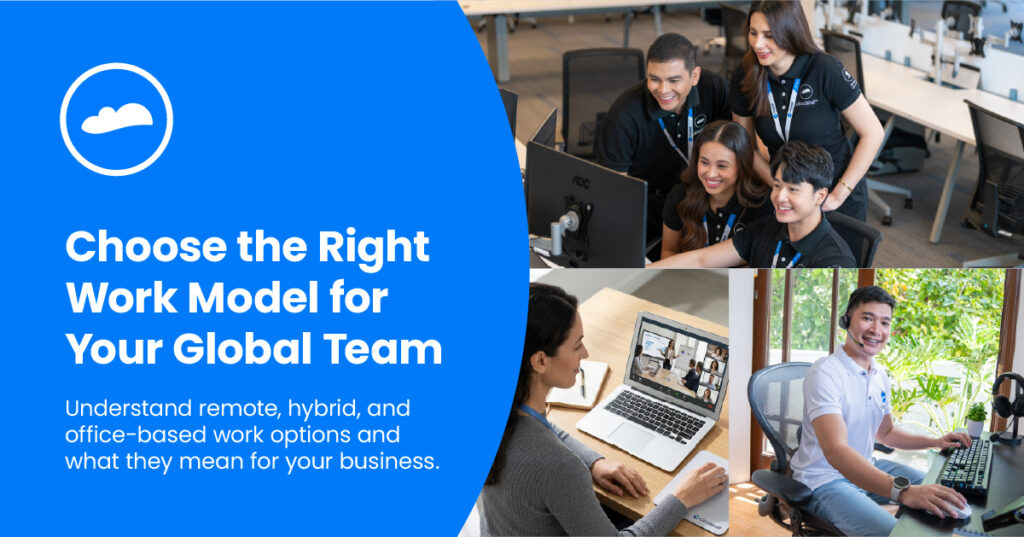
A few years ago, going fully remote was the obvious move for businesses with global teams. It cut overhead, opened up hiring, and let people work from wherever suited them. Now, the workplace is shifting again.
As offshore teams grow, businesses may start to notice practical challenges: onboarding takes longer, handovers are delayed, rework increases, and some teams struggle to keep up with higher workloads.
These issues do not automatically mean remote work is the wrong choice, but they can be a reason for businesses to reassess their current setup. Some continue to work effectively with fully remote teams, while others are considering hybrid or office-based arrangements to address specific operational needs.
Each setup comes with its own benefits and challenges. Let’s explore the three main working models, what each one actually delivers, and how to find the right fit for your global team.
Key Takeaways
- Remote Work: Maximizes talent reach and autonomy; best for deep, focused, asynchronous work.
- Hybrid Work: Combines focused home days with structured in-office collaboration; reduces turnover while maintaining productivity.
- Office-Based Work: Ideal for intensive onboarding, sensitive data compliance, and high-frequency real-time coordination.
- Decision Rule: Base your choice on task type, team maturity, compliance needs, and support infrastructure, not rigid company-wide mandates.
The 3 Core Workforce Models: Remote, Hybrid, and Office
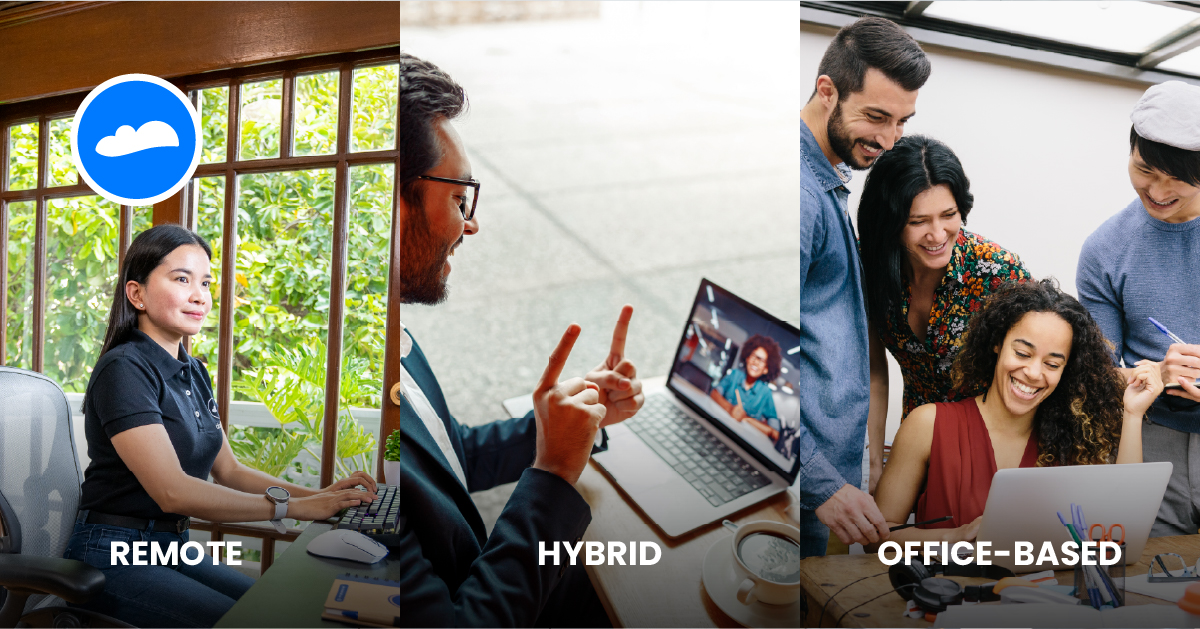
Most global teams use one of three models:
- Remote work. Employees work from home or another location of their choice, with little or no requirement to work from a physical office.
- Hybrid work. Employees split their time between remote work and a physical office, on a fixed or flexible schedule.
- Office-based work (onsite). Employees work mainly or entirely from a physical office.
Benefits and Challenges of Remote, Hybrid and Office-Based Work
Every workforce model is unique, with benefits that may work well for your team and potential downsides that may affect your operation. Once you understand what each model really offers, it gets a lot easier to see which one fits your teams and how your business runs.
Remote Work
Remote work gives employees the flexibility to work from their preferred location without needing to be in a company office every day. While this setup can offer greater freedom and convenience, it also comes with challenges that many organizations need to consider.
Benefits of Remote Work
- Employees don’t have to worry about their daily commute, which helps them save time, effort, and money. It also gives them more control over how they structure their day and helps them maintain a better work-life balance and overall well-being.
- Employees can shape their workspace around the task at hand, which really helps in roles that need long, uninterrupted concentration.
- Businesses can hire from a much wider area, without being limited to candidates who live near one office or are willing to relocate. A broader talent pool across cities, regions, and countries means access to more experienced candidates, specialized skills that are hard to find locally, and a workforce that better reflects a global client base.
- It’s easy for team members in different time zones to work together without needing to be in the same place. This can help businesses coordinate global teams across different working hours.
Challenges of Remote Work
- Spontaneous problem-solving and quick knowledge-sharing don’t happen as naturally when a team never shares a workspace. Remote teams can still build real connections, but it takes more deliberate effort to get there. A peer-reviewed study of more than 61,000 Microsoft employees, published in Nature Human Behaviour, found that going fully remote left teams less connected to each other and cut cross-team collaboration by about a quarter.
- New employees often learn how a team works by spending time with colleagues, not just reading documents or joining calls. Research featured by CEPR found that new hires who started fully remote were more likely to leave in their first few months than those who received some in-person training.
- Managers often find it harder to read workload, morale, employee productivity, and day-to-day progress without any in-person contact, especially on large or newer teams. Microsoft’s Work Trend Index found hybrid managers are more likely than in-person managers to say they struggle to trust their employees to do their best work (49% versus 36%) and report less visibility into the work getting done (54% versus 38%).
A remote working model offers clear benefits for businesses and remote workers, and for many teams, it remains the right fit. Its challenges don’t erase those benefits, but they make it worth checking whether the setup still meets the team’s needs as the business changes.
Hybrid Work
A hybrid working model combines remote work with time in a physical office. It gives employees some flexibility while restoring in-person structure. For many global teams, it becomes a practical middle ground between independent work and face-to-face interaction.
Benefits of Hybrid Work
- Employees retain some control over where they work while having scheduled office days that create a predictable rhythm.
- Office days give teams regular opportunities for face-to-face problem-solving, informal knowledge-sharing, and relationship-building, while remote days can support focused work.
- New employees can receive live, hands-on guidance in the office alongside remote sessions and independent learning.
- Scheduled in-person days give managers more direct visibility while digital tools support communication and tracking on remote days.
Challenges of Hybrid Work
- Scheduling office days across teams, time zones, and multiple locations can become difficult.
- Hybrid teams need clear communication practices, so employees working remotely do not miss conversations or become disconnected from colleagues in the office.
- An unclear hybrid policy can create confusion around when employees should be onsite, which activities require in-person participation, and how teams should collaborate.
Hybrid work productivity is strongest when you design the model on purpose rather than leave it entirely to individual preference. A well-structured hybrid work model gives teams clear expectations around in-office and remote work while still allowing some flexibility in how they organize their schedules.
In a study led by Nicholas Bloom involving 1,600 employees at a technology company, researchers found that working onsite three days a week and working from home two days a week did not hurt performance reviews or promotion rates. It also improved job satisfaction and reduced the number of employees leaving by about a third.
Office-Based Work (Onsite)
Office-based work suits teams that rely on real-time collaboration, hands-on training, in-person meetings, or close day-to-day supervision. This includes newer teams still building shared processes, or roles where a lot of context gets exchanged informally. However, office-based work also comes with challenges, including commuting costs, less flexibility, and the need for suitable office space and resources.
Benefits of Office-Based Teams:
- Managers can see teams working together day to day, making it easier to provide immediate feedback and address issues as they arise.
- Newer employees can learn directly from experienced colleagues and pick up processes, context, and workplace norms through regular interaction, supporting their professional development over time.
- Being together in the same physical space creates more opportunities for spontaneous conversations, collaboration, and relationship-building.
Challenges of Office-Based Work
- Office-based teams have less control over where they work and take on regular commuting time that remote employees avoid.
- Office-based teams depend on having suitable workspace, technology, and infrastructure in place. Establishing physical offices in other countries can increase costs for office space, utilities, equipment, and facility management. Businesses must also navigate local building, fire safety, and occupancy requirements.
- Employees who joined under a remote arrangement may need support adjusting to a more structured onsite routine.
Office-based work can provide the structure and in-person interaction some teams need, while introducing costs and requirements that may not suit every workforce. The decision comes down to whether those benefits are important enough for the team to justify the added demands on employees and the business.
Remote vs Hybrid vs Office-Based: A Quick Comparison
Here’s a quick side-by-side comparison of the three working models for easy reference.
| Feature | Remote Work | Hybrid Work | Office-Based (Onsite) |
| Best For | Independent, deep-focus tasks & asynchronous teams | Balanced teams needing focus + connection | Real-time collaboration, onboarding, tight supervision |
| Talent Reach | Global / Unrestricted | Local (within commuting distance) | Strictly local / Commuter radius |
| Onboarding Speed | Slower; relies on structured digital training | Moderate; accelerated by onsite days | Fast; informal shadowing & spontaneous support |
| Overhead Cost | Lowest (no physical footprint) | Moderate (flexible desk booking/hubs) | Highest (dedicated physical leases & utilities) |
| Key Challenge | Isolation, communication gaps | Scheduling and coordination difficulties | Commute fatigue, talent pool restrictions |
How to Choose the Right Work Model for Your Business?
No single model works for every company, and most of the time no single model works for every team inside the same company. The right approach comes from a few honest questions:
- What kind of work does this team do? Deep, focused work often translates well to remote setups, such as analysts, writers, or developers working independently on tasks. In contrast, work that relies on constant, real-time communication, such as sales teams coordinating deals or support teams handling live issues together, often benefits from a shared workspace.
- How experienced is the team? Newer teams, or teams with a lot of recent hires, usually need more in-person support during onboarding and the first few months. They haven’t built up the shared processes and working relationships that help people figure things out on their own.
- What do employees actually need? Commute times, caregiving responsibilities, and personal circumstances all influence which work arrangement is practical for employees. When these needs aren’t considered, it can lead to lower job satisfaction, disengagement, or higher turnover. According to a Gallup poll, avoiding daily commute is consistently the top reason employees give for preferring hybrid or remote work. Gallup’s latest data also shows that six in ten remote-capable employees prefer a hybrid schedule.
- What does the business need? Client-facing work, regulatory requirements, or specific operational needs can rule out certain models, regardless of what employees prefer. A team handling sensitive data under strict compliance rules, or one that needs to be onsite with a client, doesn’t always get to choose freely.
- What can you realistically support? A hybrid or office-based model only works if the space, technology, and management practices behind it are in place. That means having enough desks and meeting rooms, tools that make collaboration easy, and managers who know how to keep a team aligned and supported when not everyone is in the office on the same day.
A good workforce strategy treats these as ongoing questions, not a one-time decision, as teams change, and business needs change with them. Integrate workforce planning into how you run the team, not just into how you set it up.
When to Move From Remote to Hybrid or Office-Based Work?
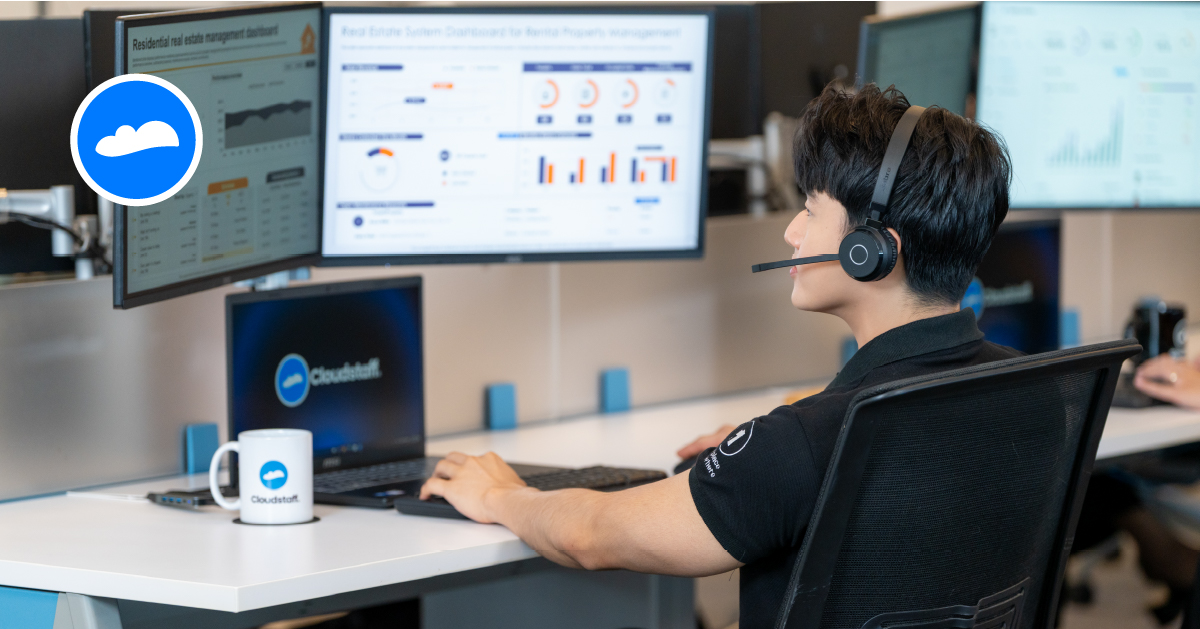
A few signals suggest it may be time to reconsider a fully remote model:
- Onboarding is taking noticeably longer, and new hires are struggling to build context without support close at hand.
- Managers are finding it harder to track workload and progress as the team grows.
- Cross-team collaboration feels slower or more effortful than it used to.
- The business has reached a size or stage where shared space and closer coordination would clearly help.
None of these signals mean remote work has failed. But they point to areas where the team may need a different approach, making it worth checking whether the original model still fits.
What a Return-To-Office Strategy Should Include?
Any shift toward hybrid or office-based work needs a plan, not just an announcement, so you can transition without unnecessarily disrupting employees.
Start with a clear, honest reason, something specific and true, like improving onboarding or collaboration, rather than a vague directive that only invites questions.
Give the business advance notice and a realistic timeline. A sudden change can be difficult for a team and may hurt morale and retention far more than a gradual, well-communicated shift.
Individual conversations matter just as much as the plan itself. They help you understand how commute distance, caregiving responsibilities, and other personal circumstances may affect each employee’s ability to work onsite. That gives you a chance to consider practical adjustments before setting expectations for the team.
Support during the transition helps, too. That could mean assistance with transport or relocation, flexible start dates, or a phased schedule that eases the team into a shared workspace rather than switching overnight.
Where possible, keep some ongoing flexibility. Even a modest hybrid arrangement often delivers most of the collaboration and visibility benefits of a full return to the office, with far less disruption.
A June 2026 study on occasional in-office days, published as a CEPR discussion paper, based on a large business-process outsourcing provider found that just one office day a month increased productivity by 7.8%. It also reduced attrition by about a third, while improving communication among employees.
Handle a transition well, and it strengthens the team. Handle it poorly, and even a sound reason feels discouraging and damages trust.
How Cloudstaff Can Support Different Workforce Models?
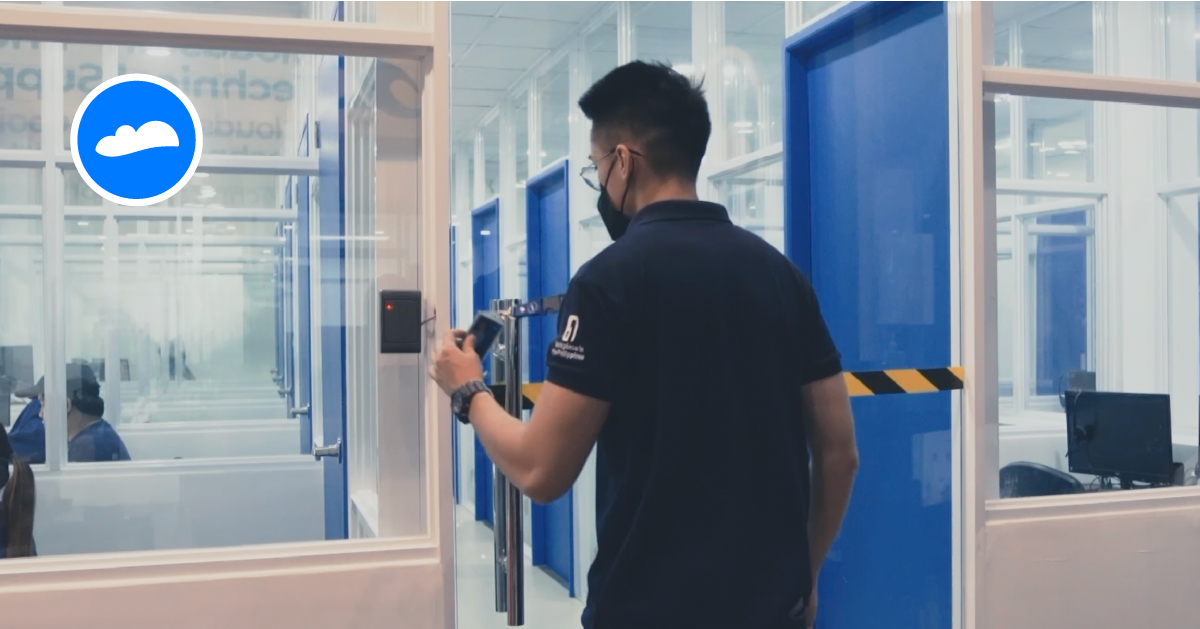
Once you have chosen which work model is best for your business, Cloudstaff helps you put it into practice through our infrastructure, employee support, and change management.
- Infrastructure: For teams that want an office, Cloudstaff already has physical infrastructure and security compliance in place across its delivery centers in the Philippines, India, Colombia, Kenya, and Sri Lanka. It also has dedicated onshore teams in the US, Australia, and the UK. That gives your Cloudstaffers a workplace without the cost and administrative burden of setting up your own local office or committing to commercial real estate. They can work from these locations full-time or on a hybrid schedule, depending on your team’s needs.
- Employee support: A change in work model affects each person differently. Cloudstaff holds individual conversations with Cloudstaffers about what the change means for their commute, caregiving, and personal circumstances. It also offers practical help, such as transport or relocation support where appropriate, so your team stays engaged through the move.
- Change management: Cloudstaff plans the transition with you, based on your team and goals, so onboarding, handovers, and daily work keep running smoothly. This applies regardless of which work model you’re moving to.
Final Thoughts

The future of work isn’t about choosing the same model for every team. The right approach depends on what your people need to perform well. It may change as the team grows, client needs shift, or personal circumstances change. Choose deliberately, then revisit the decision regularly.
The businesses that get the most out of their work model are the ones that match it to how their teams actually operate: the kind of work being done, how experienced the team is, what employees genuinely need, and what the business can realistically support. Get that right, and the model you choose stops being a compromise and starts being an advantage.
Frequently Asked Questions
Is hybrid work better than fully remote?
Hybrid work isn’t necessarily better than fully remote work. The right choice depends on what the roles require. Remote work can suit roles requiring focused, independent work, while hybrid work offers a balance of flexibility and in-person collaboration.
Does office-based work improve onboarding?
Office-based work can make onboarding easier by giving new employees direct access to colleagues, immediate feedback, and opportunities to observe established processes. However, effective onboarding still depends on clear training, documentation, and manager support.
How many days a week should employees work in the office for a hybrid model?
There is no fixed number of office days required for a hybrid work model. Many companies choose two or three days a week, while others adjust the schedule based on team responsibilities, collaboration needs, and business goals. The key is to make office days purposeful, using them for activities such as team meetings, onboarding, and collaborative work, while allowing employees flexibility for tasks they can complete effectively remotely.
Considering a change to your team’s work setup?
Talk to Cloudstaff about your options and find the right fit for your business.